EC Advertising in Bulgaria
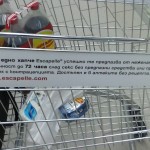
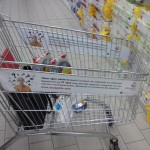
As evidenced by these pictures from Bulgaria, some European countries allow advertising of over-the-counter medical products. This particular ad is for EC and has been placed on the side of a shopping cart.

"Expanding knowledge and access
to emergency contraception"
"Expanding knowledge and access to emergency contraception in Europe"
June 2020. ECEC participated in the webinar organised by FP2020 “Emergency contraception and young people. Your questions answered” on June 16th. These are some of the issues addressed: What are the facts about young people’s use of EC? Does it match our assumptions? Is it safe for young people to use EC frequently? How frequent…
December 2025. ECEC and the International Planned Parenthood Federation (IPPF) have come together to merge their data on mifepristone for medical abortion and ulipristal acetate (UPA) for emergency contraception, with the aim of shedding light on the actual global availability of these essential medicines. A summary of this joint analysis has now been published in…
Data from the study “Women’s perception of emergency contraceptive pills” are now available. The study examined Spanish women’s opinions and knowledge on hormonal EC. The researchers’ findings included the following: 84% of Spanish women consider that having the emergency contraceptive pill (ECP) available is a major breakthrough for woman. 76% considered that the ECP is…
A Behavior and Attitudes survey carried out on behalf of Bayer Healthcare found that in the last two years, approximately 17% of women had accessed EC, with 5% accessing it more than once. Read more about the survey here.
September 2021. The French Health Minister recently announced that in 2022, access to contraception will be free for women up to 25 years old. This policy that makes access to some contraceptive methods free of cost (no charges for medical appointments to get a prescription, checkups, tests, and the method itself) extends now to all…
On July 2015, the French Ministry of Health (Haute Autorité de Santé) updated its guidance on emergency contraception, first published on December 2013. Fiche Mémo – Contraception d’urgence provides recommendations on LNG EC, UPA EC, and the use of Cu-IUD for EC, and can be accessed here.
Menú