
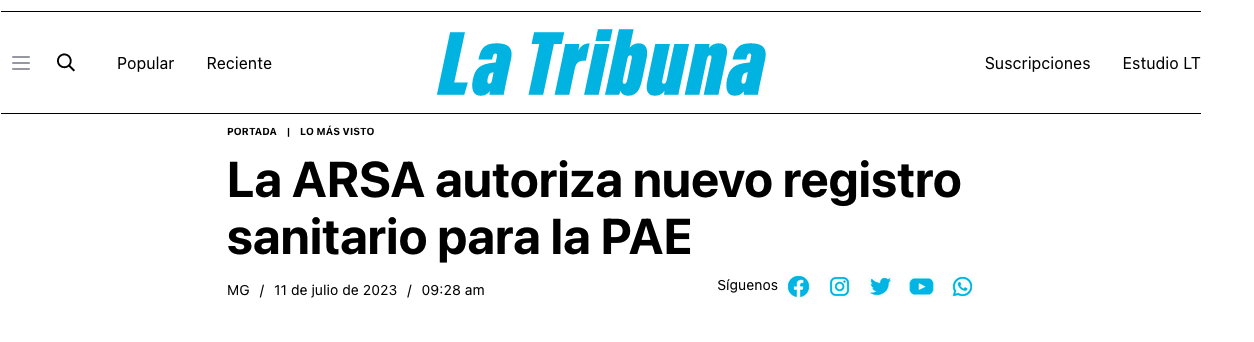
EC pills already registered in Honduras

July 2023. The registration of the first LNG EC pill has already been approved by Honduras authorities in July. According to local news outlets, the spokesperson from the Health Regulation Agency said that the Agency “recognizes the importance of this medicine for women’s reproductive health, which is why rigorous criteria have been established to ensure its quality, safety, and efficacy”. 

Only last March, Honduras President, Xiomara Castro, announced that EC pills would be allowed to be marketed and used in the country, putting an end to a ban of more than 10 years on the use and sale of EC pills.
Similar Posts

  • |

    LNG and UPA remain suitable EC options for all, EMA concludes

    The European Medicines Agency (EMA) released the following statement today: “The European Medicines Agency has concluded its review of emergency contraceptives containing levonorgestrel or ulipristal acetate to assess whether increased bodyweight affects the effectiveness of these medicines in preventing unintended pregnancy following unprotected sexual intercourse or contraceptive failure. The Agency’s Committee for Medicinal Products for Human…

  • ICEC shares new evidence on safety of EC pills in ongoing pregnancies

    The International Consortium for Emergency Contraception shared an updated summary of studies on the theme of safety of EC pills in ongoing pregnancies. We hope you find it useful for your work. “Evidence continues to accrue confirming that emergency contraceptive pills (ECPs) do not harm a developing fetus if they are mistakenly taken early in an…

  • Argentina: New data on EC use and access

    November 2024. The Study Lucía: Uses and preferences of contraceptive methods in women aged 15 to 49 years in Argentina, was recently published. This quantitative and qualitative research has consulted 2,000 women and people identifyin as LGTB from all over the nation. The study findings, published in September 2024, include valuable information about access to…

  • Continued inequalities in access to contraceptive choice in Europe

    On March 24, 2015, the International Planned Parenthood Federation European Network (IPPF EN) launched a new Barometer of Women’s Access to Modern Contraceptive Choice in 16 EU Countries (Extended). This report analyses how easily women in 16 EU countries (Bulgaria, Cyprus, Czech Republic, Denmark, Finland, France, Germany, Ireland, Italy, Latvia, Lithuania, The Netherlands, Poland, Romania, Spain,…

  • Global trends in emergency contraceptive pills use

    November 2025. The European Consortium for Emergency Contraception (ECEC) has released a new publication bringing together recent data on knowledge and use of emergency contraceptive pills (ECPs) from 23 countries. Although population-level studies on contraceptive practices have expanded in recent years, information on ECP use remains inconsistent, unsystematized, and often unpublished. To help address this,…

  • WHO: Contraception delivery during an epidemic

    February 2021. The World Health Organization just added two chapters to its Family Planning Handbook. One of them addresses contraception delivery during an epidemic. These are some of the recommendations: Providers should ensure that individuals make voluntary and informed choices, and that privacy and confidentiality are respected. Multiple doses of emergency contraceptive pills can be provided. Many…